

About Assayhouse
What This Is
Assayhouse publishes field guides to cosmetic ingredients. Each guide covers one product category — facial care, makeup, body care, hair care, hand and nail care, hygiene and cleansing — and profiles the ingredients most commonly found in mass-market formulations for that category.
The goal is not to tell you which products to buy. It is to give you the vocabulary and the method to read an ingredient list yourself, understand what the individual materials are and why they are there, and draw your own conclusions.
The Hallmarks
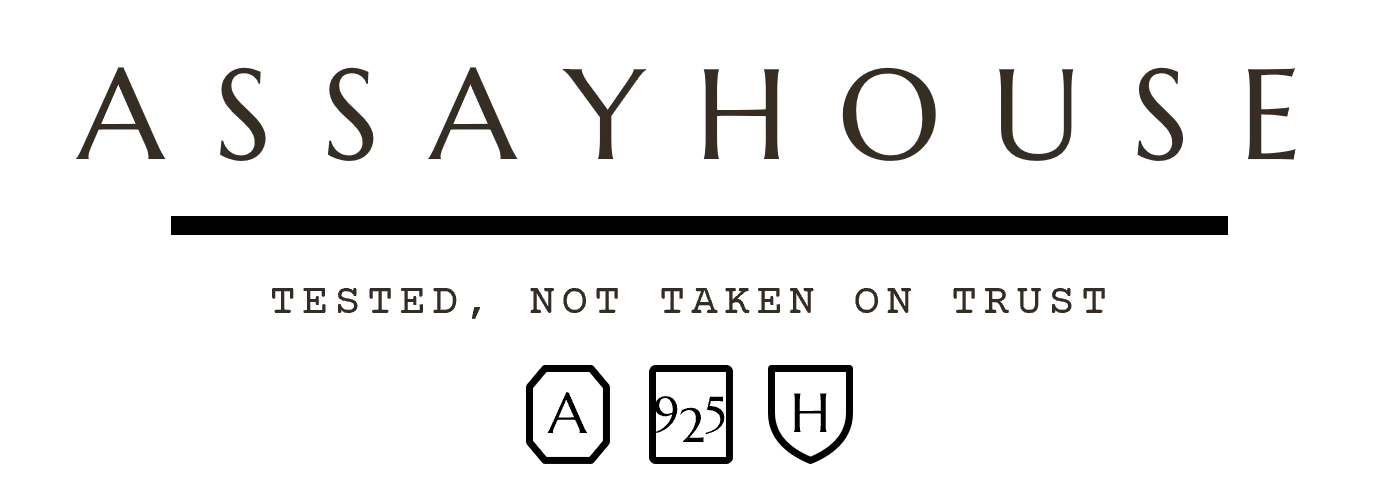
The mark at the foot of every page borrows from British hallmarking. An assay office does not print a logo on silver or gold. It strikes a small punch into the metal to certify what the metal is, and every punch in the row says one thing.
Our row has three fixed punches. The first, A, is the sponsor's mark: the name behind the work, here Assayhouse. The second, 925, is the standard mark, borrowed from sterling silver, where 925 means 925 parts in 1,000 are pure silver. It stands for a stated standard that anyone can check, instead of a claim. The third, H, is the office mark: the house where the work was tested.
Each volume adds a fourth punch, its Roman numeral. The three fixed marks identify the house and the numeral identifies the guide. The line beneath the wordmark, "Tested, not taken on trust", is the same idea: a mark is worth something only because someone checked.
The Method
Every ingredient profile follows the same structure: what the material is, where it came from, why it appears in the formulation it appears in, and where else it is used beyond cosmetics. Each profile notes the INCI name — the standardised ingredient nomenclature used on product labels in both the EU and the US — so you can find the same material under the same name regardless of which label you are reading.
The Six-Question Label Framework, published with each volume, applies this knowledge to a real label read: six questions, asked in the same order, that tell you the most about a formulation with the least effort. The framework is the practical application of the profiles.
Sources
Profiles are built from regulatory filings, the EU CosIng database, the FDA cosmetic ingredient database, peer-reviewed chemistry literature, and the Cosmetic Ingredient Review (CIR) safety assessments. Where a claim about a material's history or use comes from a specific source, that source is cited in the References section. No manufacturer or brand has provided information used in these profiles, and no ingredient is profiled on the basis of a company's own product documentation.
What This Is Not
Assayhouse does not name, recommend, or criticise specific products or brands. No product, brand, or ingredient supplier has paid for placement or coverage here. The guides do not constitute medical or dermatological advice. If you have a specific skin condition or concern, a dermatologist is the right resource, not a field guide to ingredient chemistry.
Corrections
Every profile carries a "Last verified" date. If you find an error — a formula, a date, a historical claim — please report it tocorrections@assayhouse.eu. Corrections are reviewed and applied to the affected profile; the verified date is updated when a material change is made.